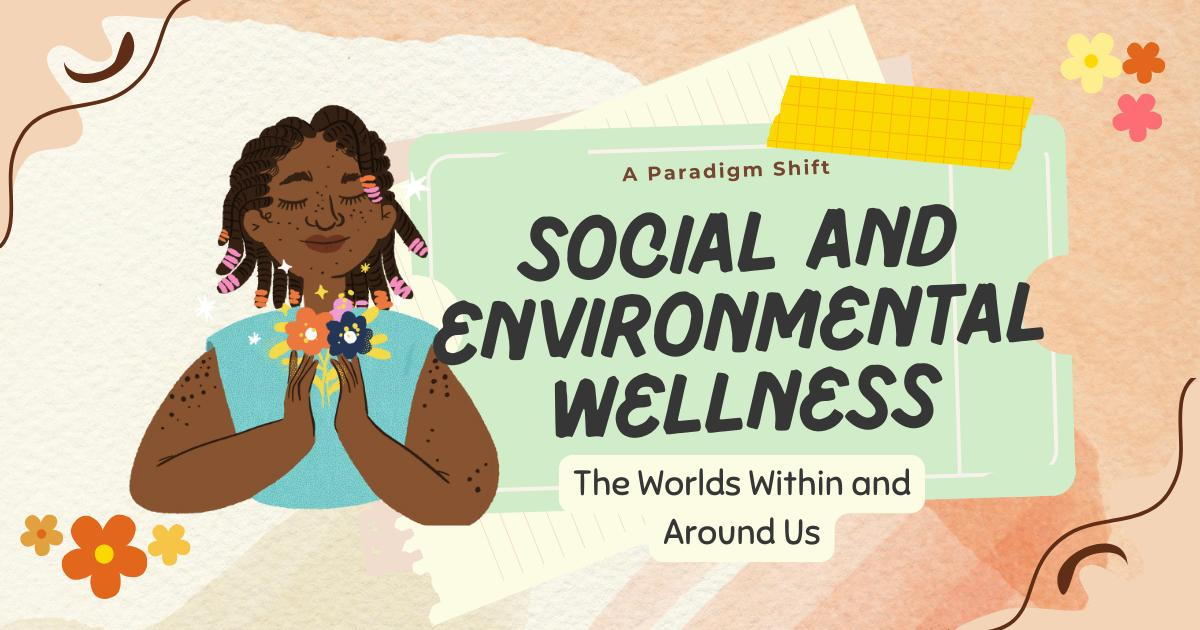
Social and Environmental Wellness – The Worlds Within and Around Us
- posted: May 29, 2025
Last March, we began exploring the 8 Dimensions of Wellness, a holistic model that recognizes the many areas of our lives that contribute to our overall well-being. In April, we took a deeper dive into Emotional and Financial Wellness, uncovering how our feelings and finances are deeply connected to how we live and relate to the world.
This May, let’s turn our attention to two equally vital dimensions that are often misunderstood or overlooked: Social Wellness and Environmental Wellness. These two are intricately connected—not just to each other—but to how we function as human beings in community, space, and purpose.
Social Wellness: It's Not Just About People – It's About Connection
Social wellness refers to our ability to connect, to belong, and to thrive in relationships—with others and with ourselves.
We often think of social wellness as having friends or being extroverted. But in truth, it’s more about quality than quantity. It's about the depth of our connections, not just their existence.
Types of Relationships: Romantic, Familial, Professional, and Social
Each relationship in our life plays a different role, and with each one comes a unique emotional dynamic—a different “ecosystem,” so to speak. Just as a plant requires specific conditions to thrive (sunlight, water, soil), each relationship needs the right emotional climate to be healthy.
Let’s take a closer look at these different types:
Romantic Relationships
Romantic relationships often require the greatest degree of emotional risk and intimacy. These partnerships thrive on openness, mutual support, emotional safety, and often physical closeness. They can be a powerful mirror, reflecting our strengths and insecurities.
Example: You might be used to being independent and in control, but in a romantic relationship, you’re asked to be seen—really seen—which can feel both exhilarating and terrifying. When trust is broken here, the emotional ripple can feel deeper than in other types of relationships.
Familial Relationships
Family relationships are often the longest-lasting, and with that comes layers of complexity. These bonds are shaped by shared history, cultural values, and sometimes unspoken expectations. They can be nurturing, strained, complicated, or comforting—all at once.
Example: You may feel like a caregiver around your parents but more childlike when you're with your older sibling. Or perhaps there's tension because your personal values have grown away from your family's traditional views. Understanding and accepting this complexity is part of tending to your social wellness.
Professional Relationships
At work, relationships may be cordial, collaborative, or even deeply supportive—but they exist within a context of roles, goals, and structure. Emotional intelligence is key here: knowing how to self-regulate, communicate respectfully, and read the room.
Example: You may feel close to a coworker, but oversharing about a recent breakup might cross a boundary and create discomfort. On the other hand, giving space for someone to be heard during a team conflict can build trust and cooperation.
Friendships and Social Circles
Friendships often form based on shared interests, values, life stages, or mutual understanding. A healthy friendship offers emotional reciprocity, honesty, and a sense of belonging. But not all friendships are meant to last forever—and that’s okay.
Example: A childhood friend might no longer align with your values as adults. That doesn't mean the relationship was a failure—just that it served its purpose at one stage of life. Knowing when to invest, reevaluate, or release friendships is part of your social wellness journey.
Acquaintances and Associates
Not every relationship will be deep—and it doesn’t need to be. Social wellness also includes being able to navigate casual interactions with kindness, awareness, and respect. These connections may be fleeting, but they still leave an impression.
Example: The way you greet your barista or speak to a delivery person reveals how you carry yourself socially, even when there's no emotional investment. These moments matter—they contribute to the energy you put into and receive from the world.
The Role of Emotional Intelligence
Social wellness leans heavily on our emotional intelligence (EQ)—the ability to be aware of, control, and express emotions, while also handling interpersonal relationships judiciously and empathetically.
Ever overshared with someone too soon? Or withheld something that caused tension later? Social wellness is about knowing how much to share, and with whom—not from fear, but from wisdom. It’s about knowing who is a “friend” versus who is “friendly,” and what level of access each person should have in your life.
You might be friendly with someone at the gym, sharing light conversations and laughs, but that doesn’t mean they need to know your deepest insecurities. Likewise, a work associate might invite you to hang out, but if the relationship is transactional, it’s okay to set a gentle boundary.
Social wellness encourages you to honor your boundaries and recognize which relationships pour into you—and which ones only take.
Environmental Wellness: Beyond Trees and Trash Bins
When people hear “environmental wellness,” they often think of recycling, clean air, or going green. While those are important, environmental wellness goes much deeper than that. It includes both our external surroundings and our internal atmosphere.
Internal Environment
Your internal environment consists of:
Thoughts
Beliefs
Values
Chemical balance (biochemistry)
You can be in a beautiful home, eat healthy food, and still feel toxic inside if your thoughts are self-sabotaging or your internal dialogue is cruel.
For instance, if you believe you're unworthy of love, that belief will shape how you engage in relationships—possibly even sabotaging them before they begin.
External Environment
Your external environment includes:
Your home
Neighborhood
Workplace
Faith or social communities
Access to healthy food or healthcare
If you grew up in a food desert or lived in a community with few safe places to play or connect, that experience shaped your behavior and beliefs.
And here’s something powerful: We are products of our environments—but we can also become architects of them.
Think of how differently you might behave at a meditation retreat vs. a busy corporate office. One space invites calm; the other demands urgency. Environmental wellness is about being aware of how your surroundings influence your mood, behavior, and even your values—and adjusting when necessary.
Blending the Two: Social and Environmental Interplay
Social and environmental wellness are deeply intertwined—often more than we realize. The environments we live in can either open doors to connection or quietly close us off. At the same time, the people we surround ourselves with influence where we go, what we prioritize, and even how we feel in our own spaces.
Think about a friend group that loves spending time outdoors—hiking, picnicking, or attending wellness workshops. Simply by being around them, you're more likely to end up in environments that support mental clarity and physical health. Now contrast that with a social circle where gathering always means late nights, high stress, and overstimulation. One influences the other.
Or consider your internal environment. If your thoughts are constantly overwhelmed by judgment or anxiety, it may affect your social interactions—causing you to isolate, assume the worst in others, or overextend in relationships for validation.
Your social environment (community, relationships, workplace) and your physical and internal environment (your home, body, thoughts) are in constant conversation. The goal isn’t perfection—it’s awareness. Are they supporting each other?
Self-Check: Do You Truly Understand These Dimensions?
Here are a few questions to ask yourself:
Social Wellness
Am I nurturing relationships that nourish me?
Are your connections fueling your growth—or draining your energy? Wellness means giving to others, yes—but not at the cost of your own well-being.Do I know the difference between oversharing and being authentic?
Authenticity is about sharing what’s real and relevant. Oversharing can come from a place of anxiety or a desire for quick connection. Learn to read the emotional depth of a relationship before going too deep too fast.Do I feel safe and seen in my closest circles?
In healthy relationships, you feel both free and valued. If you're always walking on eggshells or hiding your truth, that may be a red flag worth exploring.
Environmental Wellness
Do I feel calm or chaotic in my home space?
Your physical environment affects your nervous system. Even small shifts—like clearing your desk or adding a plant—can change the emotional tone of a space.Are my thoughts supporting or sabotaging my wellness?
Internal clutter (negative self-talk, limiting beliefs, looping worries) can be just as toxic as physical mess. Do a regular mental "spring cleaning."Does my external environment align with the kind of life I want?
Look around: Does your lifestyle reflect your values? If you value peace but your schedule is packed and loud, there may be a disconnect worth addressing.
Simple Solutions & Practices
Here are some practical ways to support both dimensions:
For Social Wellness:
Schedule intentional time with people who uplift you.
Instead of letting connection be random, be deliberate. Reach out, plan coffee dates, or join a community group that reflects your interests.Practice active listening—make space for others to feel seen.
So often, we listen to reply—not to understand. Try listening just to listen. People remember how you make them feel, not just what you say.Set boundaries with relationships that feel draining.
Boundaries aren’t walls—they’re filters. Protect your peace without guilt.Evaluate your inner circle every so often: Who are you becoming around them?
Your environment includes people. If your circle doesn’t reflect your values or growth, it might be time to realign.
For Environmental Wellness:
Declutter a space in your home to create mental clarity.
Start small: a drawer, a shelf, a corner of your room. Outer order often brings inner calm.Spend time in nature, even if it's just a walk.
Nature is a natural regulator of our nervous system. No agenda—just presence.Choose one thought each morning that you want to nourish throughout the day.
Like watering a seed, give attention to thoughts that support your well-being. “I have everything I need to be grounded today.”Audit your inputs—What are you watching, listening to, reading?
Your digital environment counts too. If your media diet is full of chaos, fear, or comparison, your internal wellness may be absorbing more than you think.
Final Thought
Your wellness isn't isolated. It’s a web of relationships—with yourself, with others, and with the world around you. The social and environmental dimensions remind us that we are both deeply individual and undeniably communal. That we are shaped by where we are—and who we let in.
May this month bring you moments of clarity, connection, and conscious choices.
- posted: May 29, 2025
Last March, we began exploring the 8 Dimensions of Wellness, a holistic model that recognizes the many areas of our lives that contribute to our overall well-being. In April, we took a deeper dive into Emotional and Financial Wellness, uncovering how our feelings and finances are deeply connected to how we live and relate to the world.
This May, let’s turn our attention to two equally vital dimensions that are often misunderstood or overlooked: Social Wellness and Environmental Wellness. These two are intricately connected—not just to each other—but to how we function as human beings in community, space, and purpose.
Social Wellness: It's Not Just About People – It's About Connection
Social wellness refers to our ability to connect, to belong, and to thrive in relationships—with others and with ourselves.
We often think of social wellness as having friends or being extroverted. But in truth, it’s more about quality than quantity. It's about the depth of our connections, not just their existence.
Types of Relationships: Romantic, Familial, Professional, and Social
Each relationship in our life plays a different role, and with each one comes a unique emotional dynamic—a different “ecosystem,” so to speak. Just as a plant requires specific conditions to thrive (sunlight, water, soil), each relationship needs the right emotional climate to be healthy.
Let’s take a closer look at these different types:
Romantic Relationships
Romantic relationships often require the greatest degree of emotional risk and intimacy. These partnerships thrive on openness, mutual support, emotional safety, and often physical closeness. They can be a powerful mirror, reflecting our strengths and insecurities.
Example: You might be used to being independent and in control, but in a romantic relationship, you’re asked to be seen—really seen—which can feel both exhilarating and terrifying. When trust is broken here, the emotional ripple can feel deeper than in other types of relationships.
Familial Relationships
Family relationships are often the longest-lasting, and with that comes layers of complexity. These bonds are shaped by shared history, cultural values, and sometimes unspoken expectations. They can be nurturing, strained, complicated, or comforting—all at once.
Example: You may feel like a caregiver around your parents but more childlike when you're with your older sibling. Or perhaps there's tension because your personal values have grown away from your family's traditional views. Understanding and accepting this complexity is part of tending to your social wellness.
Professional Relationships
At work, relationships may be cordial, collaborative, or even deeply supportive—but they exist within a context of roles, goals, and structure. Emotional intelligence is key here: knowing how to self-regulate, communicate respectfully, and read the room.
Example: You may feel close to a coworker, but oversharing about a recent breakup might cross a boundary and create discomfort. On the other hand, giving space for someone to be heard during a team conflict can build trust and cooperation.
Friendships and Social Circles
Friendships often form based on shared interests, values, life stages, or mutual understanding. A healthy friendship offers emotional reciprocity, honesty, and a sense of belonging. But not all friendships are meant to last forever—and that’s okay.
Example: A childhood friend might no longer align with your values as adults. That doesn't mean the relationship was a failure—just that it served its purpose at one stage of life. Knowing when to invest, reevaluate, or release friendships is part of your social wellness journey.
Acquaintances and Associates
Not every relationship will be deep—and it doesn’t need to be. Social wellness also includes being able to navigate casual interactions with kindness, awareness, and respect. These connections may be fleeting, but they still leave an impression.
Example: The way you greet your barista or speak to a delivery person reveals how you carry yourself socially, even when there's no emotional investment. These moments matter—they contribute to the energy you put into and receive from the world.
The Role of Emotional Intelligence
Social wellness leans heavily on our emotional intelligence (EQ)—the ability to be aware of, control, and express emotions, while also handling interpersonal relationships judiciously and empathetically.
Ever overshared with someone too soon? Or withheld something that caused tension later? Social wellness is about knowing how much to share, and with whom—not from fear, but from wisdom. It’s about knowing who is a “friend” versus who is “friendly,” and what level of access each person should have in your life.
You might be friendly with someone at the gym, sharing light conversations and laughs, but that doesn’t mean they need to know your deepest insecurities. Likewise, a work associate might invite you to hang out, but if the relationship is transactional, it’s okay to set a gentle boundary.
Social wellness encourages you to honor your boundaries and recognize which relationships pour into you—and which ones only take.
Environmental Wellness: Beyond Trees and Trash Bins
When people hear “environmental wellness,” they often think of recycling, clean air, or going green. While those are important, environmental wellness goes much deeper than that. It includes both our external surroundings and our internal atmosphere.
Internal Environment
Your internal environment consists of:
Thoughts
Beliefs
Values
Chemical balance (biochemistry)
You can be in a beautiful home, eat healthy food, and still feel toxic inside if your thoughts are self-sabotaging or your internal dialogue is cruel.
For instance, if you believe you're unworthy of love, that belief will shape how you engage in relationships—possibly even sabotaging them before they begin.
External Environment
Your external environment includes:
Your home
Neighborhood
Workplace
Faith or social communities
Access to healthy food or healthcare
If you grew up in a food desert or lived in a community with few safe places to play or connect, that experience shaped your behavior and beliefs.
And here’s something powerful: We are products of our environments—but we can also become architects of them.
Think of how differently you might behave at a meditation retreat vs. a busy corporate office. One space invites calm; the other demands urgency. Environmental wellness is about being aware of how your surroundings influence your mood, behavior, and even your values—and adjusting when necessary.
Blending the Two: Social and Environmental Interplay
Social and environmental wellness are deeply intertwined—often more than we realize. The environments we live in can either open doors to connection or quietly close us off. At the same time, the people we surround ourselves with influence where we go, what we prioritize, and even how we feel in our own spaces.
Think about a friend group that loves spending time outdoors—hiking, picnicking, or attending wellness workshops. Simply by being around them, you're more likely to end up in environments that support mental clarity and physical health. Now contrast that with a social circle where gathering always means late nights, high stress, and overstimulation. One influences the other.
Or consider your internal environment. If your thoughts are constantly overwhelmed by judgment or anxiety, it may affect your social interactions—causing you to isolate, assume the worst in others, or overextend in relationships for validation.
Your social environment (community, relationships, workplace) and your physical and internal environment (your home, body, thoughts) are in constant conversation. The goal isn’t perfection—it’s awareness. Are they supporting each other?
Self-Check: Do You Truly Understand These Dimensions?
Here are a few questions to ask yourself:
Social Wellness
Am I nurturing relationships that nourish me?
Are your connections fueling your growth—or draining your energy? Wellness means giving to others, yes—but not at the cost of your own well-being.Do I know the difference between oversharing and being authentic?
Authenticity is about sharing what’s real and relevant. Oversharing can come from a place of anxiety or a desire for quick connection. Learn to read the emotional depth of a relationship before going too deep too fast.Do I feel safe and seen in my closest circles?
In healthy relationships, you feel both free and valued. If you're always walking on eggshells or hiding your truth, that may be a red flag worth exploring.
Environmental Wellness
Do I feel calm or chaotic in my home space?
Your physical environment affects your nervous system. Even small shifts—like clearing your desk or adding a plant—can change the emotional tone of a space.Are my thoughts supporting or sabotaging my wellness?
Internal clutter (negative self-talk, limiting beliefs, looping worries) can be just as toxic as physical mess. Do a regular mental "spring cleaning."Does my external environment align with the kind of life I want?
Look around: Does your lifestyle reflect your values? If you value peace but your schedule is packed and loud, there may be a disconnect worth addressing.
Simple Solutions & Practices
Here are some practical ways to support both dimensions:
For Social Wellness:
Schedule intentional time with people who uplift you.
Instead of letting connection be random, be deliberate. Reach out, plan coffee dates, or join a community group that reflects your interests.Practice active listening—make space for others to feel seen.
So often, we listen to reply—not to understand. Try listening just to listen. People remember how you make them feel, not just what you say.Set boundaries with relationships that feel draining.
Boundaries aren’t walls—they’re filters. Protect your peace without guilt.Evaluate your inner circle every so often: Who are you becoming around them?
Your environment includes people. If your circle doesn’t reflect your values or growth, it might be time to realign.
For Environmental Wellness:
Declutter a space in your home to create mental clarity.
Start small: a drawer, a shelf, a corner of your room. Outer order often brings inner calm.Spend time in nature, even if it's just a walk.
Nature is a natural regulator of our nervous system. No agenda—just presence.Choose one thought each morning that you want to nourish throughout the day.
Like watering a seed, give attention to thoughts that support your well-being. “I have everything I need to be grounded today.”Audit your inputs—What are you watching, listening to, reading?
Your digital environment counts too. If your media diet is full of chaos, fear, or comparison, your internal wellness may be absorbing more than you think.
Final Thought
Your wellness isn't isolated. It’s a web of relationships—with yourself, with others, and with the world around you. The social and environmental dimensions remind us that we are both deeply individual and undeniably communal. That we are shaped by where we are—and who we let in.
May this month bring you moments of clarity, connection, and conscious choices.
Contact Us
My Availability
A Paradigm Shift, LLC
Monday
9:00 am - 5:00 pm
Tuesday
9:00 am - 5:00 pm
Wednesday
9:00 am - 5:00 pm
Thursday
9:00 am - 5:00 pm
Friday
9:00 am - 5:00 pm
Saturday
Closed
Sunday
Closed